Back to Home

Your Returns

A Fixed Rate, Paid Monthly

You lend. We build. You are paid first, at a fixed rate, secured against a specific building.

0

Fixed Annual Coupon

Contractually fixed for the life of your note. Not performance-linked and not discretionary. Paid monthly from month 13, accruing from the date your capital is drawn.

1st

Ranking

Secured by a first legal charge over the property. You rank ahead of Octavian's own equity — the coupon and your capital are paid before Octavian takes anything.

3-5yr

Capital Return

Principal returned at the end of your chosen term through refinancing of the completed, income-producing asset.

Notice. The 12% rate is contractually fixed but is not guaranteed, and repayment of capital is not guaranteed. Payment depends on completion of works, securing a lease, the property producing rent, and refinancing conditions at the end of your term. Interest paid by a UK company to a UK individual is generally subject to 20% deduction at source under section 874 of the Income Tax Act 2007. Octavian Property Group is not authorised or regulated by the Financial Conduct Authority and this investment is not covered by the Financial Services Compensation Scheme. Capital is at risk. Available only to certified high net worth and self-certified sophisticated investors.

Identified Assets

Where Your Capital Goes

Your capital is advanced against an identified asset, not spread across a pool. Before any drawdown you receive the underwriting pack for that specific building: the acquisition price against independent valuation, the schedule of works and cost plan, the provider and the proposed lease terms, the projected yield on total cost, and the refinance assumption behind the return of your capital.

You will know which building your money is in, what it cost, what it is projected to be worth, and who the tenant will be, before you commit.

Identified Asset

One property, named before you commit.

First Legal Charge

Registered at HM Land Registry against that title.

Full Underwriting

The complete pack, before drawdown, not after.

See a Live Deal in Underwriting.

Book a 30-minute discovery call. We'll walk you through the numbers on a live deal in underwriting.

No commitment. No pressure. Just the facts.
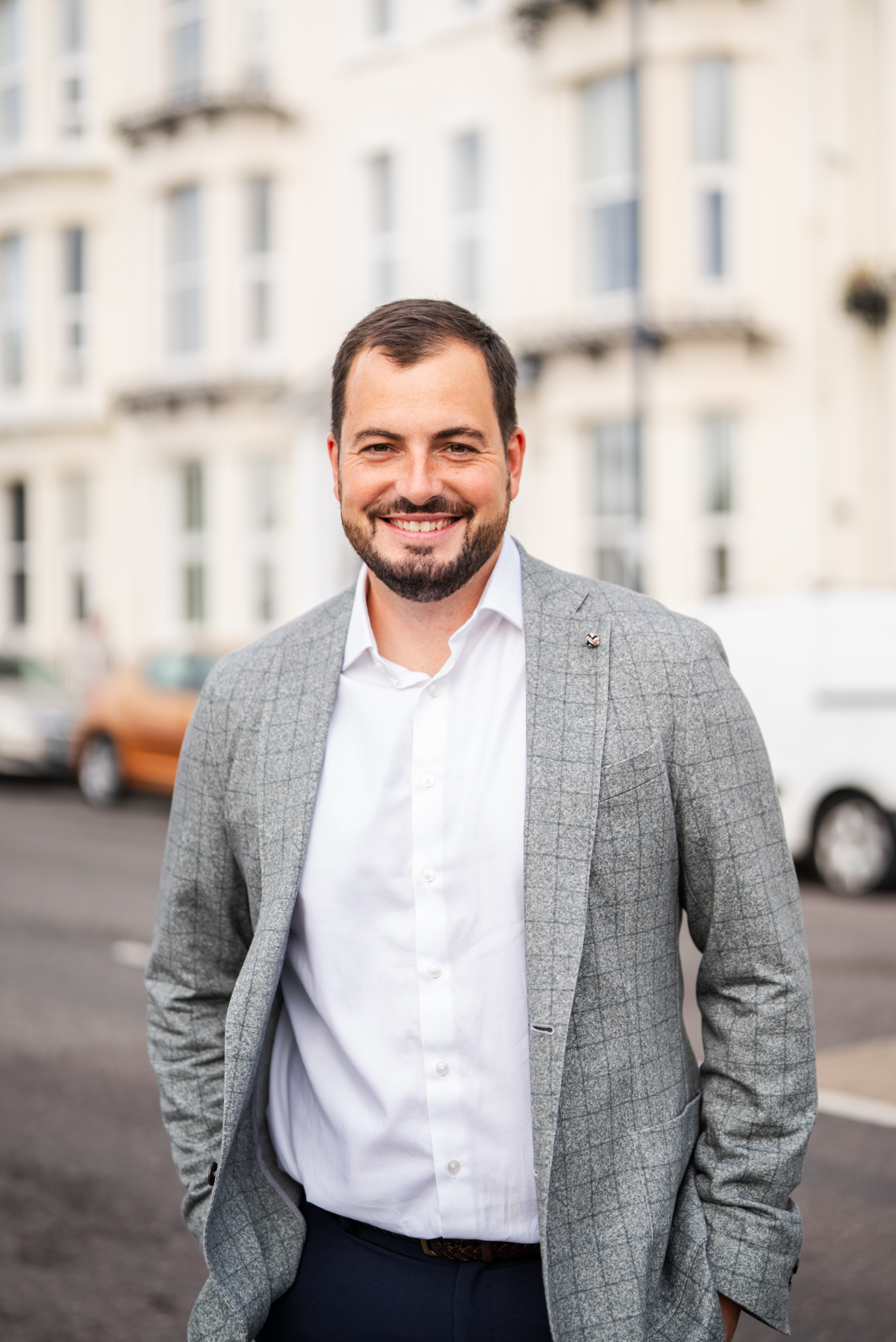
Andrew Lindsey

You'll speak directly with Andrew

Octavian Property Group

Common Questions

Frequently Asked Questions

Return Structure

What does a fixed 12% coupon mean?
Your note carries a contractually fixed rate of 12% per annum on the capital you advance. It does not rise if a project outperforms and it does not fall if a project underperforms. It is a debt obligation of the borrowing company, ranking ahead of Octavian's equity. A fixed rate is not the same as a guaranteed return: if the borrower cannot pay, the rate does not change the outcome. Capital is at risk.
How is the 12% calculated?
12% per annum on the capital advanced, accruing daily from drawdown. On a £100,000 note that is £12,000 a year, or £1,000 a month once cash distributions begin. Distributions are funded from rental income on let assets.
Where do I rank if things go wrong?
You are a secured creditor. Senior lending secured against a property ranks ahead of your charge where it exists; you rank ahead of Octavian's equity in all cases. Octavian receives nothing from a project until your coupon and capital obligations have been met. In an insolvency, recoveries follow the order of registered security, and there is no certainty that a charge recovers the full amount lent.
Is the 12% guaranteed?
No. The rate is fixed by contract; payment is not guaranteed. Payment depends on the borrowing company's ability to pay, which depends on completing the works, securing a lease, and the property producing rent. Octavian is not FCA authorised and this investment is not covered by the Financial Services Compensation Scheme. You may not get back the full amount you invest.
What is the total return over a 5-year term?
On a 5-year note, contractual interest totals 60% of capital advanced (12% × 5 years), paid monthly from month 13 with months 1-12 accrued and paid alongside. Your principal is returned at the end of the term. There is no additional profit share. Interest paid by a UK company to a UK individual is generally subject to 20% withholding at source — see the tax question below.

Capital & Liquidity

How and when is my principal returned?
Your principal is returned at the end of your chosen term (3 or 5 years) through refinancing. The completed, income-producing property, with its long-term FRI lease with a Registered Provider, serves as collateral for a commercial mortgage. The refinance proceeds are used to return your original invested capital in full.
What is the refinancing process?
Once a property is completed, tenanted, and producing stable rental income, it qualifies for commercial refinancing. A lender provides a mortgage based on the property's income and value, and those funds are used to return investor capital. The property continues generating rental income to service the mortgage while Octavian retains ownership.
What if the refinance is delayed?
If refinancing conditions are unfavourable at the end of your term, Octavian may extend the investment period until conditions improve. During any extension, interest continues to accrue at the contractual 12% and is paid from ongoing rental income where available. We underwrite conservatively to minimise this risk, but market conditions can affect timing. An extension is a real possibility, not a remote one, and you should not commit capital you may need at the exact end of the term.
Can I withdraw my investment before the term ends?
This is an illiquid investment and early withdrawal is not standard. Your capital is locked for your chosen term (3 or 5 years). In exceptional circumstances, Octavian may facilitate a transfer to another eligible investor, but this cannot be guaranteed. You should only invest capital you can commit for the full term.
What is the difference between the 3-year and 5-year terms?
Both terms offer the same fixed 12% coupon. The 5-year term provides a longer income stream, while the 3-year term returns your capital sooner. Choose based on your liquidity needs and investment horizon. Both terms are subject to refinancing timelines.

Costs & Tax

Is the 12% paid gross or net of tax?
Interest paid by a UK company to a UK individual is generally subject to deduction of income tax at 20% at source under section 874 of the Income Tax Act 2007. On a 12% coupon that means approximately 9.6% is received in cash, with the 20% accounted for to HMRC and credited against your tax liability. Your final position depends on your marginal rate and how you hold the investment. Corporate lenders within the charge to UK corporation tax are generally able to receive interest gross. This is not tax advice — take your own.
What are the tax implications of investing with Octavian?
Interest on your note is subject to income tax, generally with 20% deducted at source (see the question above). Tax treatment depends on your individual circumstances and how you hold the investment (personal, company, or pension). We strongly recommend consulting a qualified tax advisor before investing. Tax rules can change.
Can I invest through an ISA, SIPP, or SSAS?
Investments through SIPPs (Self-Invested Personal Pensions) and SSAS (Small Self-Administered Schemes) may be possible, subject to the scheme rules and trustee approval. ISA eligibility depends on the specific investment structure. We recommend discussing pension-based investment with your pension administrator and financial advisor to confirm eligibility and tax benefits.

Risk & Performance

What are the main risks of investing with Octavian?
Key risks include: construction delays or cost overruns, interest rate changes affecting refinancing terms, property market fluctuations, changes in government housing policy, and tenant-related risks. This is an illiquid investment and your capital is at risk. You may not get back the full amount invested. It is suitable only for sophisticated investors who understand and accept these risks. Octavian has no completed project history. You are relying on the founders' prior records and on the underwriting of each individual asset.
What is the worst-case scenario?
The intended outcome on every project is a long-term FRI lease with a Registered Provider. If no provider lease is secured, the property is let privately in a high-demand area, which produces a lower yield and reintroduces management cost and void risk. In a more severe case — a build that overruns badly, a valuation that falls short at refinance, or a provider that fails — the asset may not support full repayment of capital at the end of the term. Your security is a legal charge over a real building, which is a meaningful protection, but it is not a guarantee of full recovery. This is a higher-risk investment and you should be prepared to lose some or all of the capital you commit.
How does Octavian mitigate investment risk?
Risk mitigation includes: in-house construction (control over timelines and costs), fixed-price contracts (protection against overruns), seeking FRI lease commitments before construction (reducing tenant risk), conservative underwriting (built-in contingency), a first legal charge over an identified asset, and Registered Provider tenants, with demand underpinned by statutory local authority housing duties.
What is Octavian's track record?
Octavian was founded in 2024 and has no completed assets. It makes no performance claim. The founders' career records are set out on the team page: approximately £400 million of combined transaction and delivery experience across private equity, NHS, local authority and school board projects. That is founder experience, not an Octavian track record, and it should be weighed as such.
How do Octavian's investments perform during economic downturns?
Social housing is countercyclical: demand increases during recessions as more people require government housing support. Long-term FRI leases with Registered Providers provide contracted income through the economic cycle, and the Housing Act 1996 creates statutory demand.
What collateral backs my investment?
Your investment is collateralised by physical property, real bricks-and-mortar assets that you can visit. Each project is secured by the underlying land and buildings, long-term FRI leases with Registered Providers providing contracted income, and the development equity created through in-house construction. Your loan is secured against a specific, identified property rather than a pooled portfolio.